


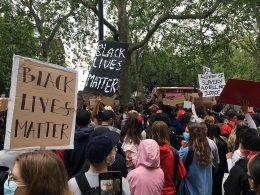
Black Lives Matter. The climate emergency. In recent years, a wave of protests have been encouraging examples of younger people engaging in democracy and making their voices heard.
The UK’s “Generation Z” (born 1995-2010) believe they can create positive social change and after a political “youthquake” in 2017, under-30s engagement with national politics remained promising at the 2019 General Election.
But this interest isn’t translating locally.
Generally, local elections see low voter turnouts and there was little change in 2021. Andrew Defty, Associate Professor of Politics at University of Lincoln, said an even lower turnout for young people in these elections would consequentially affect their lives.
“Politicians know young people are less likely to vote, so that might skew the policy agenda pursued by parties in government, nationally and locally”, Defty said. “If young people want policies that favour them, then they need to turn out and vote. It’s problematic, because if young people are less likely to get involved in politics, then they might have things imposed upon them that they didn’t have any say in and that they actually don’t want.”
Local politics also has a big representation issue. Not only are young people silencing themselves by being less likely to vote, young voices are significantly outnumbered in local authorities. In fact, the average local councillor is 60 years old and 2019 research found that less than 1% of local councillors were under the age of 25.
It’s an issue that Callum Roper, a 21-year-old politics student, feels strongly about. Roper says he wanted to “see change”, so ran to be elected as a Labour councillor to Lincolnshire County Council on May 6, receiving almost 800 votes.
“As somebody that’s involved in local politics, it can be quite disheartening when you look around the room and see that there aren’t many faces like yourself”, Roper said. “There’s a need for young people with new ideas, passion and energy to go forward. We need broad representation because the experience of a young person compared to the experience of a young person 50 years ago is extremely different. Young people absolutely have a right to have their voice heard and it can make a difference.”
And there are deeper concerns about the make-up of local authorities. Not only is the average councillor close to the retirement age, it’s an environment dominated by white men. In a stark example of under-representation, despite making up around 14% of the population, only 7% of local UK councillors are from ethnic minority backgrounds. It isn’t known how many of these Black, Asian and minority ethnic (BAME) councillors are also part of ‘Gen Z’, but young BAME councillors are likely to be even more outnumbered than white councillors of the same age.
Malaika Gangooly is a 20-year-old student and activist from Chelmsford who led the city’s Black Lives Matter protests after the death of George Floyd last year. Gangooly has since been working to raise awareness about the issues BAME people face on a daily basis, through interviews with media outlets, creating educational resource packs for schools and working with Chelmsford City Council’s anti-racism action group. She says she’s felt “welcomed” by the council, but that a lot more needs to be done to encourage young BAME people to get involved locally.
Gangooly said: “As our generation takes over, it’s more likely that people of colour will be involved in local politics and national too. A lot of things have changed since the protests last year, as I’ve seen a lot of BAME people take more of a political stance and trying to get their voices heard. The more young BAME people who get involved with politics, the bigger the impact there will be on national and international affairs.”
So young people’s lack of engagement and under-representation in local politics is silencing their voices and potentially influencing policies which directly affect them, but what can be done to solve the issue? It’s not a simple fix. Andrew Defty believes the teaching of what local politics involves in schools leaves much to be desired. As well as learning from a young age, Malaika Gangooly thinks that people should educate themselves by actively following the news, and Callum Roper wants councils to reach out more to the youth.

The last solution is partly echoed by Councillor Thomas Dyer, a 25-year-old who is the Conservative Leader on the City of Lincoln Council and a recently elected councillor of Lincolnshire County Council. Having been first elected into local politics at the age of 20, Cllr Dyer said councils reaching out needs to be balanced with self-engagement.
“I think councils want a good mix of people”, said Cllr Dyer. “If you want to be representative of the population, as well as gender and racial diversity, you’ve got to have a range of ages, otherwise the people making the decisions are all from one corner of society. Politicians have got to try and reach out to younger people. That involves councils communicating well, councillors having a social media presence and doing interviews with student journalists. But democracy goes both ways. As an individual you have got to do your research and take an interest.”
A better education on what local authorities control, self-engagement and councils reaching out could improve young people’s interest in local politics, in turn leading to a much-needed change in representation. However, as Defty points out, the general population’s engagement with local politics is in a dire state and authorities must work to improve voter turnout. Perhaps this issue goes hand in hand with changing the way young people view politics at a local level, with a better education at a younger age creating a gradual improvement in voter turnout.
In what would usually be a promising sign of young people engaging in local politics, Niko Omilana, a 23-year-old YouTuber, received 49,638 votes in May’s London Mayor Elections. But Omilana’s campaign was a social media “prank” and included a manifesto of ridiculous policies. Possibly doing more harm than good in how older people view the UK youth’s engagement with politics, the YouTuber’s “prank” was worrying for democracy in the UK, representing a failure of the system to emphasise the importance of local elections.


